
The iPhone versus Android question has been asked millions of times and answered poorly almost as often. Most comparisons dissolve into platform tribalism – iPhone users listing the features Android has had for years, Android users dismissing iOS as a walled garden. This guide takes a different approach: we are going to compare the two platforms on the things that actually affect your daily experience, with specific reference to the best phones available in 2026, and help you make the decision that is right for your situation rather than the one that generates the most online arguments.
Software Updates and Long-Term Support
This is one of the most practically important criteria for a phone purchase and one of the least discussed. Apple supports iPhones with iOS updates for six years after release – an iPhone 16 bought today will receive iOS updates through at least 2030. Apple delivers these updates to all supported devices simultaneously, regardless of carrier or geography, within 24 hours of release.
Android’s picture is more complicated. Google now offers seven years of OS and security updates on Pixel 9 series devices, which actually exceeds Apple’s commitment in raw numbers. Samsung offers seven years on the Galaxy S25 range. OnePlus offers three years of OS updates. Motorola offers two years. The Android ecosystem’s update situation ranges from excellent (Pixel) to poor (many mid-range and budget devices), and even on well-supported devices, updates arrive weeks or months after Google releases them due to manufacturer and carrier customisation requirements. If long-term support matters to you, a Pixel 9 or Galaxy S25 series device is your best Android option – and both are now competitive with iPhone on this front.
Camera Systems
Camera comparisons between the two platforms have become genuinely nuanced in 2026 because both are excellent, and each has areas of clear superiority. iPhone 16 Pro Max leads in video quality by a significant margin – Cinematic Mode, Log format video, and 4K 120fps capture are not matched by any Android device. Colour accuracy and natural processing also give the iPhone an edge in portraiture and skin tone reproduction.
Google Pixel 9 Pro leads in computational photography and AI-powered editing. Its Night Sight remains the best low-light main camera performance of any smartphone, and features like Best Take and Magic Eraser are more refined and convincing than equivalent Samsung and Apple tools. Samsung Galaxy S25 Ultra leads in zoom photography and has the most versatile camera hardware overall. Xiaomi 14 Ultra leads in sensor size and raw photographic capability for enthusiasts who want to shoot RAW and process manually.
The conclusion is that neither platform objectively wins on cameras. The best smartphone camera in 2026 for your needs depends on what you photograph most.
Privacy and Security
Apple’s privacy architecture remains structurally stronger than Android’s for one fundamental reason: Apple’s business model does not depend on advertising revenue. Apple makes money selling hardware; Google makes money selling advertising. This creates different incentive structures that shape how each platform handles data by design, not just by policy.
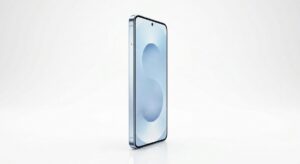
The Galaxy S25 packs the world's fastest mobile chip into a compact body at a reasonable price. Battery life is the main compromise, but for most users it's mor...
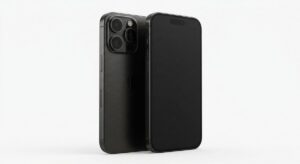
The iPhone 16 Pro delivers flagship performance and pro-grade imaging in a more manageable size. It's the pick for users who want Apple's best without the Pro M...
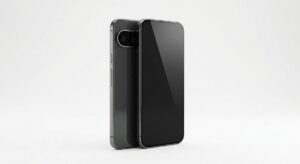
The Pixel 9 Pro is the compact camera phone champion. Everything Google does with AI and photography is here in a more manageable 6.3-inch form factor that's ea...
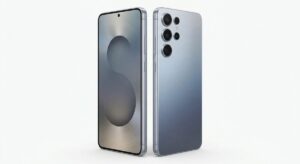
The S25 Ultra is Samsung's finest ever flagship - a camera-first powerhouse with a brilliant display and the Snapdragon 8 Elite's unbeatable performance. The S ...
The iPhone 16 Pro Max is Apple's most complete smartphone, combining unrivalled chip performance with the best camera system in the business. For those who can ...
App Tracking Transparency requires apps to ask permission before tracking you across other apps and websites – and the majority of users opt out. On-device processing for Siri and Apple Intelligence means sensitive requests are handled locally rather than sent to servers. The App Store’s review process, while imperfect, provides a meaningful security barrier against malicious apps. iMessage end-to-end encryption covers the majority of iOS users’ messaging.
Google has improved Android’s privacy significantly with the Privacy Sandbox initiative, enhanced permission controls, and Google Play Protect. Pixel devices in particular receive quick security patch updates. But Android’s open ecosystem – which is also one of its strengths – means more variation in security practices across devices and manufacturers. If privacy is your primary concern, iPhone remains the safer choice by default. If you are willing to actively manage your Android privacy settings and choose a well-supported device, the gap has narrowed.
Customisation and Flexibility
Android wins this comparison decisively and without serious contest. You can set any browser, email client, music player, or app launcher as default. You can sideload apps that are not available on the Play Store. You can access the file system directly. You can customise your home screen with widgets, custom icon packs, and third-party launchers that completely transform the interface. You can connect to a wider range of external accessories and services without platform restrictions.
iOS 18 has made meaningful progress on customisation: you can now place app icons anywhere on the home screen (not just in a grid from the top), tint all icons with custom colours, and set a wider range of default apps. The Lock Screen and Control Centre are also more customisable than they were. But even with these improvements, iOS remains significantly more restricted than Android for users who want to shape their phone to their preferences rather than adapting to Apple’s vision of how a phone should work.
Ecosystem Integration
If you own a Mac, iPad, and Apple Watch, the case for iPhone is almost unanswerable. AirDrop transfers files between Apple devices instantly and wirelessly without any setup. Handoff picks up where you left off on one device and continues seamlessly on another. iPhone as webcam using Continuity Camera produces better video quality than most dedicated laptop webcams. iMessage and FaceTime work flawlessly across all Apple devices. The integration is so deep that using an iPhone with a Mac feels like using one large device that happens to be split into two physical objects.
Android’s equivalent ecosystem, centred on Google services, works well if you are deeply invested in Gmail, Google Drive, Google Photos, and Chromebooks. Google’s cross-device integration has improved substantially with features like Phone Hub, Instant Hotspot, and Fast Pair for Android accessories. But the cross-device experience across Android manufacturers is fragmented – Samsung’s ecosystem integration with Galaxy devices is strong, but it does not extend seamlessly to OnePlus or Pixel devices the way Apple’s ecosystem does across all iPhone, Mac, iPad, and Apple Watch combinations.
Price and Value
Android offers significantly more hardware choice at every price point. You can buy a genuinely capable Android smartphone for $200-300 from Motorola or Nokia. The mid-range Android market at $350-500 is stronger than ever. At $800-1,000, multiple Android flagships offer comparable or superior specifications to iPhone at the same price. Apple’s cheapest new iPhone (iPhone 16) starts at $799; its cheapest older model (iPhone 15) is $699. There is no credible iPhone option below $500 for new devices.
However, iPhones retain their value dramatically better than Android phones. An iPhone 14 sells for roughly $350-400 used; a Samsung Galaxy S23 of the same vintage sells for $200-250. If you buy iPhones and sell them every two years, the net cost of ownership is often lower than buying Android flagships at the same frequency. Android wins on entry price; iPhone wins on resale value and total cost over a multi-year ownership cycle.
The Decision Framework
- Choose iPhone if: you own other Apple devices, prioritise privacy by default, want the best video camera, value resale value, or want the simplest possible experience with the least configuration required.
- Choose Android if: you want more control over your device, prefer Google’s services, want the best zoom camera (Samsung) or AI camera (Pixel), need a lower-cost option, or want a foldable device.
- The platform matters less than the specific phone: A Pixel 9 running Android is a better experience than a cheap Android phone from a manufacturer with poor update support. An iPhone 15 is a better experience than a cheap older Android. Within each platform, the quality variation is enormous.
Verdict
In 2026 both platforms are excellent and neither is objectively superior. iPhone is better for ecosystem integration, video, and privacy by default. Android is better for customisation, choice, and camera diversity. The best phone is the one that fits your life, your other devices, and your priorities – not the one that wins online arguments. Choose the platform that makes your most common tasks easier, and invest in a well-supported device at a price that leaves room for the next generation in three years.